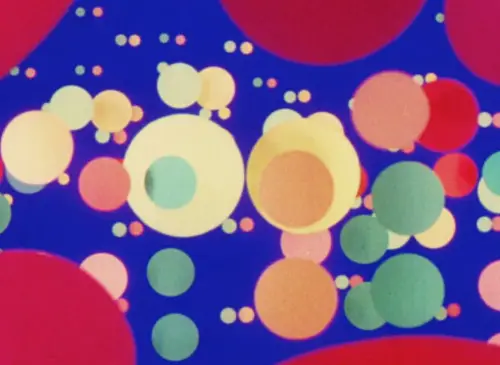
 An Optical Poem
Fantasia
Abstract animation, uncredited
Fischinger developed designs for Fantasia's opening abstract segment at Disney, then left before it was finished. His name isn't on the film.
Animation without characters or objects: pure shape, line and colour set in motion.
Abstract animation began in 1920s Germany, where Walter Ruttmann, Hans Richter, Viking Eggeling and Oskar Fischinger each set painted or cut forms moving on film. Ruttmann's Lichtspiel Opus 1, shown in Frankfurt in 1921, is often cited as the first abstract film screened in public.
Each film is built frame by frame, from cut paper, paint, wax or wire. Fischinger sliced through blocks of wax and photographed each new face, and hung paper shapes on wires for An Optical Poem.
In the order they were made. Runtimes are approximate.
Made at Paramount and completed independently in colour in 1943. Overlapping circles and diamonds pulse to a jazz score by Ralph Rainger.
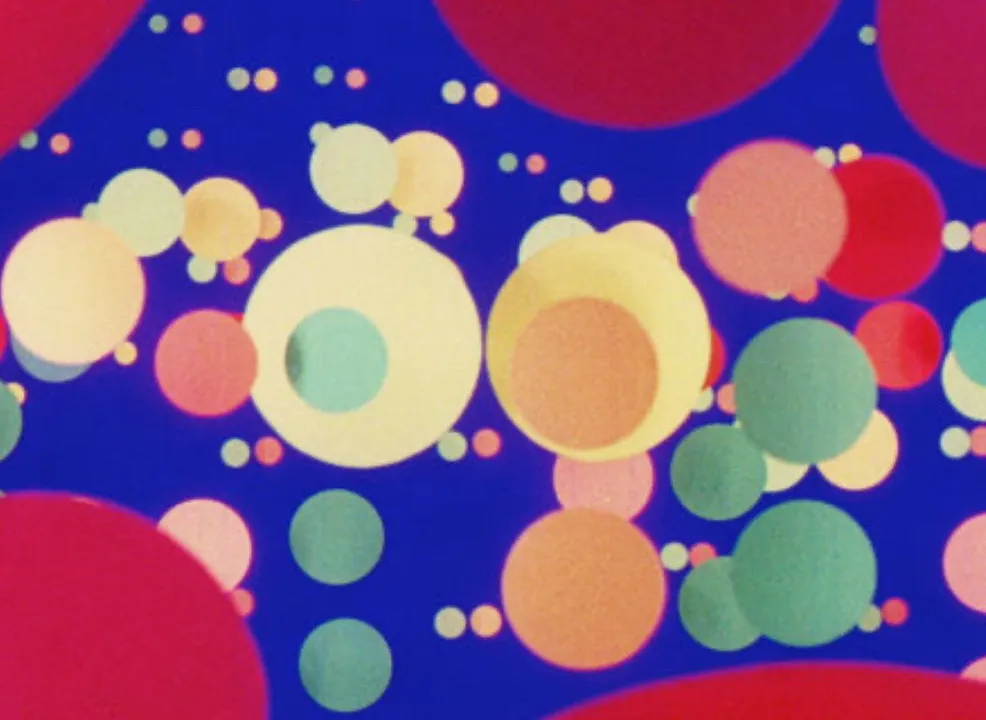
Released by MGM. Paper discs and shapes, hung on wires and filmed frame by frame, perform Liszt's Second Hungarian Rhapsody.
Lines from these films into work you may already know.
Movements, forms and techniques that share filmmakers or methods with this one.
Animation made straight onto the film strip, painted or scratched frame by frame, with no camera involved.
Animation that breaks from the cartoon: new materials, new techniques, or subjects animation isn't supposed to touch.
The German abstract film of the 1920s: shape, line and light moved to rhythm with no story, named after absolute music.
Moving abstraction composed like music, with shape, colour and rhythm in place of melody and harmony.