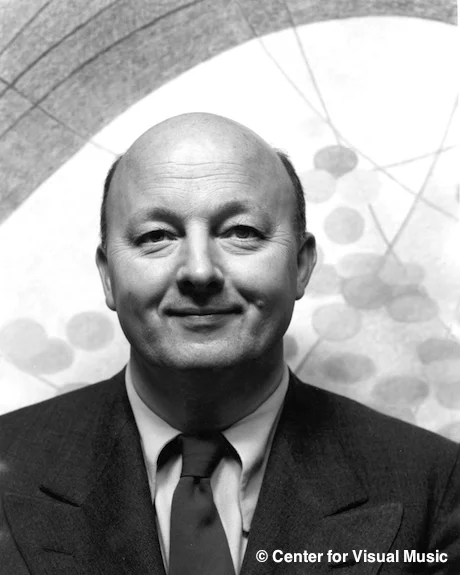
Oskar Fischinger
- 1938An Optical Poem
- 1947Motion Painting No. 1
- 1936Allegretto
Echoed in
- Fantasia1940
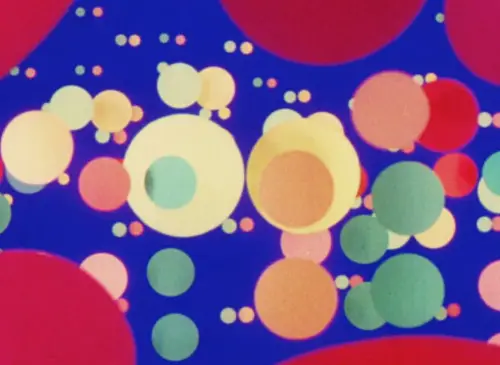
He animated pure shape and colour to music, frame by frame, and Hollywood borrowed the idea without his name on it.
Fischinger trained as an organ builder and an engineer before turning to film in the 1920s. His Studies, made in Berlin, set black-and-white shapes dancing to popular records, and they played in cinemas before feature films.
As the Nazis banned abstract art as degenerate, he left for Hollywood in 1936. He worked at Paramount, MGM, where he made An Optical Poem, and Disney, where he developed designs for the Toccata and Fugue opening of Fantasia. He left before it was finished.
Motion Painting No. 1, painted in oil on Plexiglas and filmed after each brushstroke, is his late masterpiece. He died in Los Angeles in 1967.
Where to start with Oskar Fischinger, in the order they were made. Runtimes are approximate.
Made at Paramount and completed independently in colour in 1943. Overlapping circles and diamonds pulse to a jazz score by Ralph Rainger.
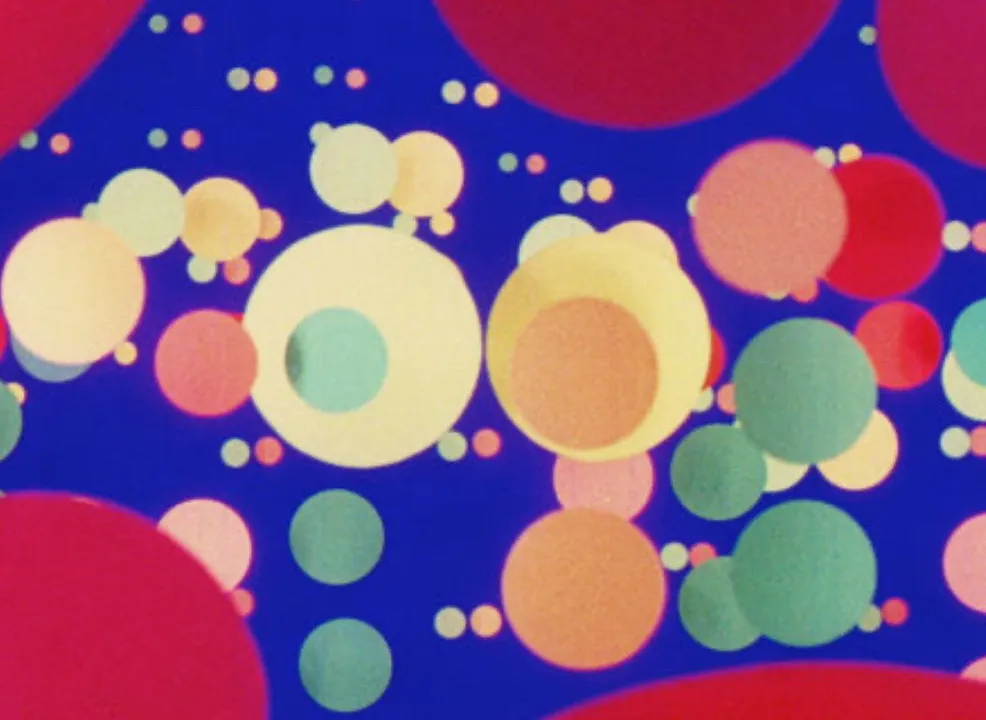
Released by MGM. Paper discs and shapes, hung on wires and filmed frame by frame, perform Liszt's Second Hungarian Rhapsody.
A single oil painting on Plexiglas, filmed after each brushstroke for nine months, unfolding to Bach's Third Brandenburg Concerto.
Where Fischinger's ideas turned up next.