Tony Conrad
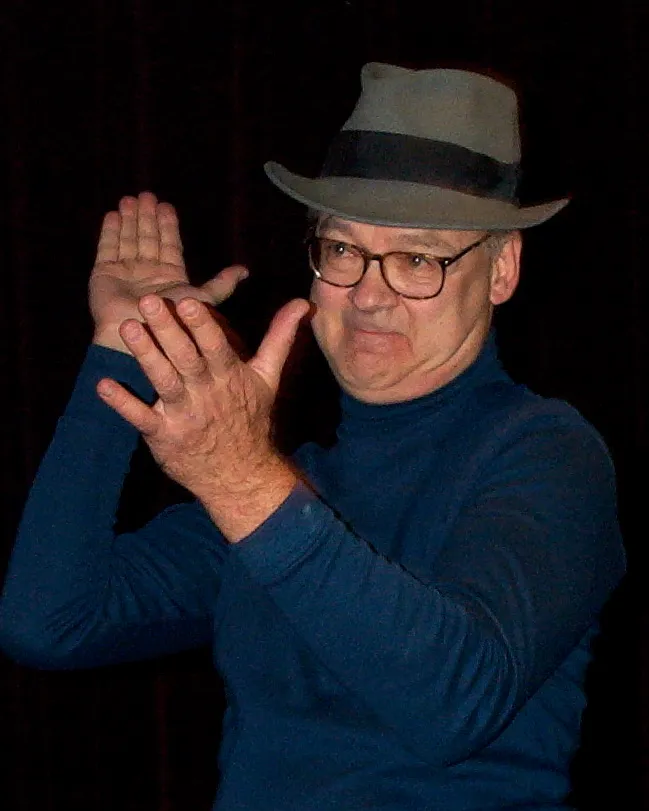
- 1966The Flicker
- 1970Straight and Narrow
- 1974Film Feedback
He made a film out of nothing but black and white frames, and audiences saw colours that weren't there.
Conrad studied the violin briefly at the Peabody Conservatory in Baltimore and graduated from Harvard in mathematics in 1962. In New York he played violin in the Theatre of Eternal Music with La Monte Young, John Cale and Marian Zazeela, holding drones for hours at a time. The Velvet Underground took its name from a paperback that Lou Reed and Cale found in his old apartment.
He shot The Flicker (1966) for about $300, on a Bolex that Jonas Mekas helped him get. It uses only solid black and solid white frames, switched at changing rates, and viewers report shapes, movement and colours that aren't on the film. P. Adams Sitney cited it in the 1969 essay that named structural film. With Beverly Grant he made Straight and Narrow (1970), which flickers between striped images instead of plain frames.
The Yellow Movies (1973) are sheets of photographic paper that change colour over years. At Antioch College, where he replaced Paul Sharits, he ran a team that processed and projected film as it left the camera. From 1976 he taught media study at the University at Buffalo, where he worked until his death in 2016. Tyler Hubby's documentary Tony Conrad: Completely in the Present came out the same year.
Where to start with Tony Conrad, in the order they were made. Runtimes are approximate.
Thirty minutes of solid black and white frames in shifting patterns, over a pulsing electronic score. It opens with a warning that it may cause seizures and that a physician should be in attendance.
Made with Beverly Grant. Striped images alternate on a flickering schedule. It is printed in black and white, but Conrad timed it so viewers see colours.
Made with a team at Antioch College. In a darkroom, film left the camera, was processed, dried and projected onto a small screen, and filmed again as it played.