Phil Solomon
- 1989Remains to Be Seen
- 1999Twilight Psalm II: Walking Distance
- 1988The Secret Garden
He treated found footage with chemicals and reprinted it until home movies and old Hollywood looked like film recovered from a rusted can.
Solomon was born in Manhattan. As a pre-med student at SUNY Binghamton in the early 1970s he took a film course with Ken Jacobs, and he later earned an MFA from the Massachusetts College of Art. From 1991 until his death he taught at the University of Colorado Boulder, where Stan Brakhage also taught, and the two made three films together.
He worked mainly in 16mm and Super 8, reworking home movies, early Hollywood films and episodes of The Twilight Zone. He treated the film chemically, then rephotographed it on his optical printer, sometimes running two strips together, until the image cracked and crystallised. After 1999 he also made digital works from Grand Theft Auto footage, including a trilogy in memory of his friend, the filmmaker Mark LaPore.
Remains to Be Seen (1989) was a Village Voice top-ten film that year, and Brakhage named it among his ten best films for Sight and Sound. Solomon received a Guggenheim Fellowship and a United States Artists fellowship. The Corcoran Gallery commissioned American Falls as a six-projection installation in 2010, and the Academy Film Archive has held his films since 2005.
Where to start with Phil Solomon, in the order they were made. Runtimes are approximate.
Night photography, lightning storms and found footage of Second World War night bombing, worked into a suburban scene of children at play. Solomon revised it in 1989.
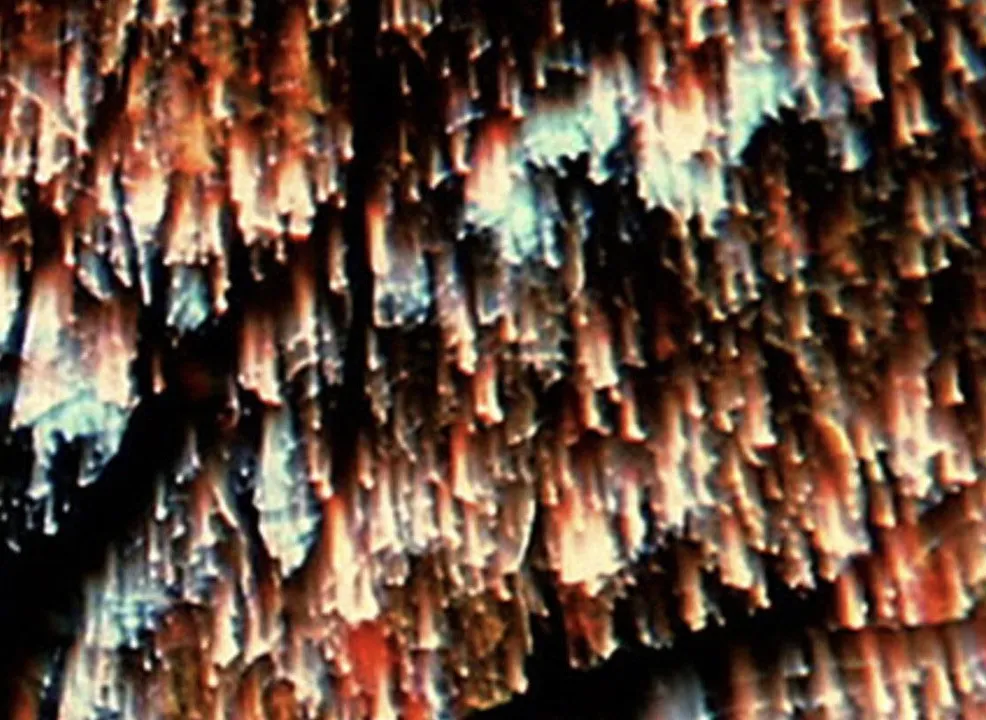
Images from a silent film of The Secret Garden and from The Wizard of Oz, reworked chemically and on the optical printer. He made it while his parents were seriously ill.
An operating room, a waterfall, a home-movie picnic and the Great Plains, treated until they blister, set to the sound of a respirator. It is dedicated to his mother.
Imagined as a film recovered from a rusted, centuries-old can. Faces and landscapes half form and dissolve in corroded textures. It is dedicated to Stan Brakhage.