City symphony
Documentary portraits of a city, often over a single day, cut to rhythm like music, with no actors or plot.
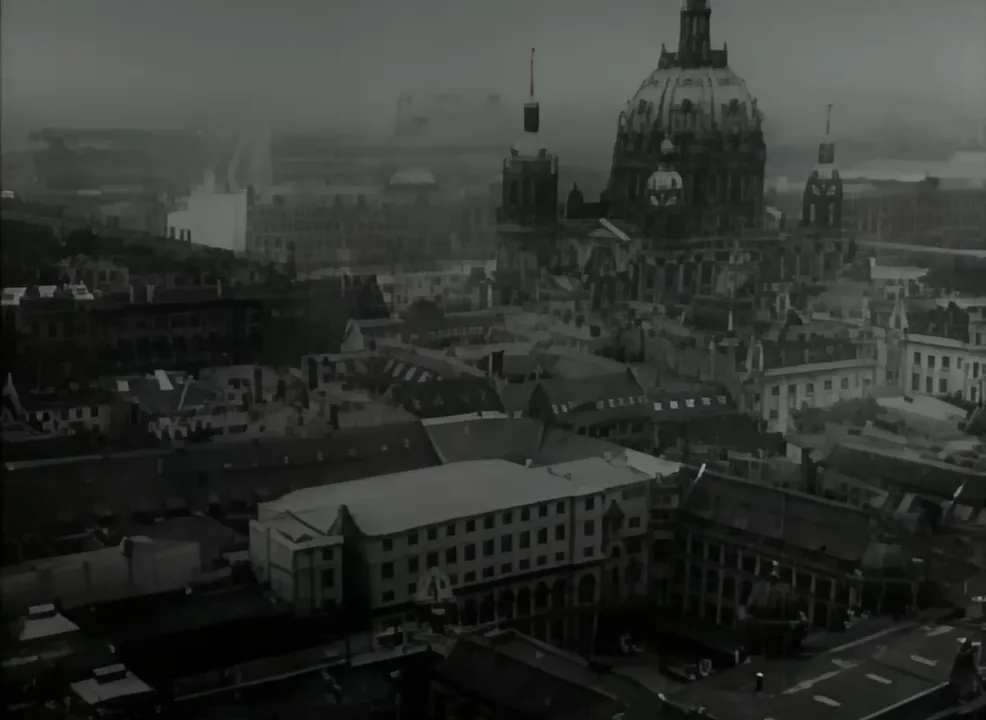
Paul Strand and Charles Sheeler's Manhatta (1921) set New York's harbour and towers against lines from Walt Whitman, and Alberto Cavalcanti's Rien que les heures (1926) followed Paris from morning to night. Walter Ruttmann's Berlin: Symphony of a Metropolis (1927) gave the form its name.
Dziga Vertov's Man with a Movie Camera (1929) turned it into a display of camera tricks across Soviet cities, and Joris Ivens's Rain (1929) and Jean Vigo's À propos de Nice (1930) took it to Amsterdam and the Riviera. A city shown without actors or story and cut to music comes back in later films such as Godfrey Reggio's Koyaanisqatsi (1982).
Films to start with
In the order they were made. Runtimes are approximate.
Nearby
Movements, forms and techniques that share filmmakers or methods with this one.