The screening that started a career
A young engineer watched Ruttmann's painted shapes move in a Frankfurt cinema in 1921 and set out to make abstract films of his own.
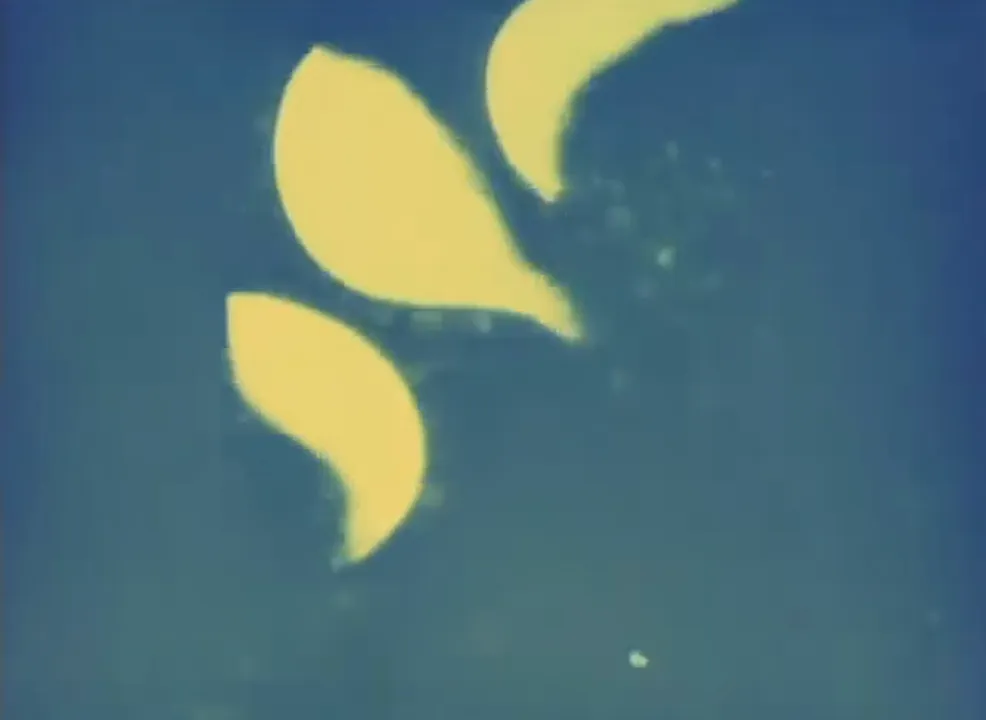
Lichtspiel Opus 1 was hand-coloured shapes swelling and colliding to a live string quintet. Oskar Fischinger, then working in Frankfurt, saw it in April 1921, introduced to Ruttmann by the critic Bernhard Diebold.
Fischinger began his own experiments with sliced wax soon after, and in 1922 he licensed his wax-cutting machine to Ruttmann, though he didn't want to copy Ruttmann's style. His Studies, black-and-white shapes synchronised to records and made in Berlin from 1929, played in cinemas across Europe.
Documented by Fischinger's biographers