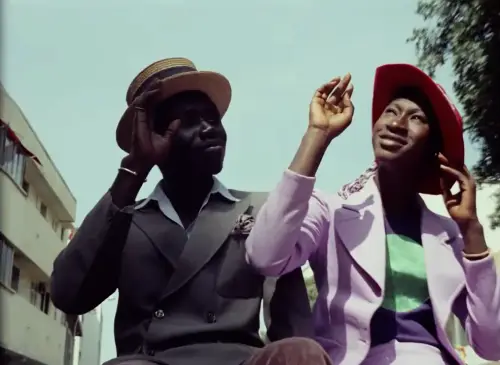
 Touki Bouki
On the Run II tour
The motorbike with horns
Mory's motorbike, a zebu skull on the handlebars, turned up again on the poster for Beyoncé and Jay-Z's 2018 tour.
The films of Senegal, from African students shooting in Paris in 1955 to Dakar's directors, who made some of the first features by sub-Saharan Africans.
Paulin Soumanou Vieyra and Mamadou Sarr shot Afrique-sur-Seine in Paris in 1955, a short often called the beginning of African cinema. After independence in 1960, the novelist Ousmane Sembène made Borom Sarret (1963), about a Dakar cart driver, and Black Girl (1966), the first feature by a sub-Saharan African director, which won the Prix Jean Vigo.
Djibril Diop Mambéty broke from the social realism around him with the jump cuts and clashing sound of Touki Bouki (1973). Safi Faye's Kaddu Beykat (1975) was the first commercially distributed feature directed by an African woman. FESPACO, the festival founded in Ouagadougou, Burkina Faso, in 1969, became a main showcase for films from across the continent, Senegal's among them.
In the order they were made. Runtimes are approximate.
Mambéty and a French woman, Inge Hirschnitz, bicker while a horse-drawn cart takes them through Dakar, past colonial government buildings, Muslims praying on the pavement and craftsmen's stalls by the market.
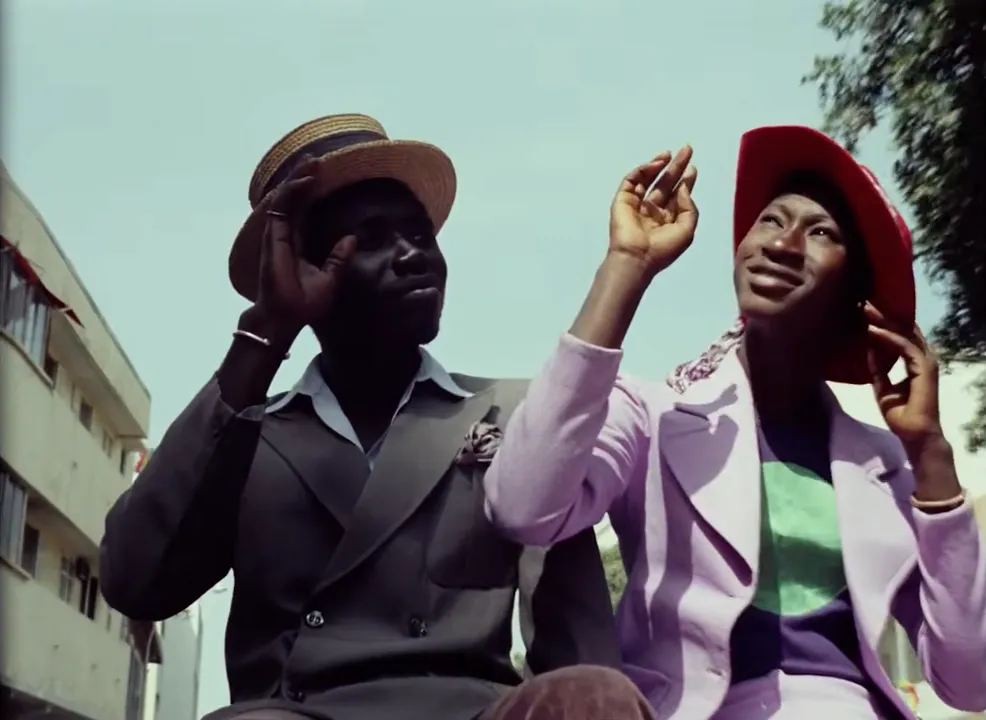
Mory, a cowherd who rides a motorbike with a zebu skull on the handlebars, and Anta, a student, hustle for the fare to Paris while a few seconds of Josephine Baker singing about Paris skip on a record. In 2008 the World Cinema Foundation restored it from the original 35mm negatives, kept in Paris and provided by Mambéty's son.
Lines from these films into work you may already know.