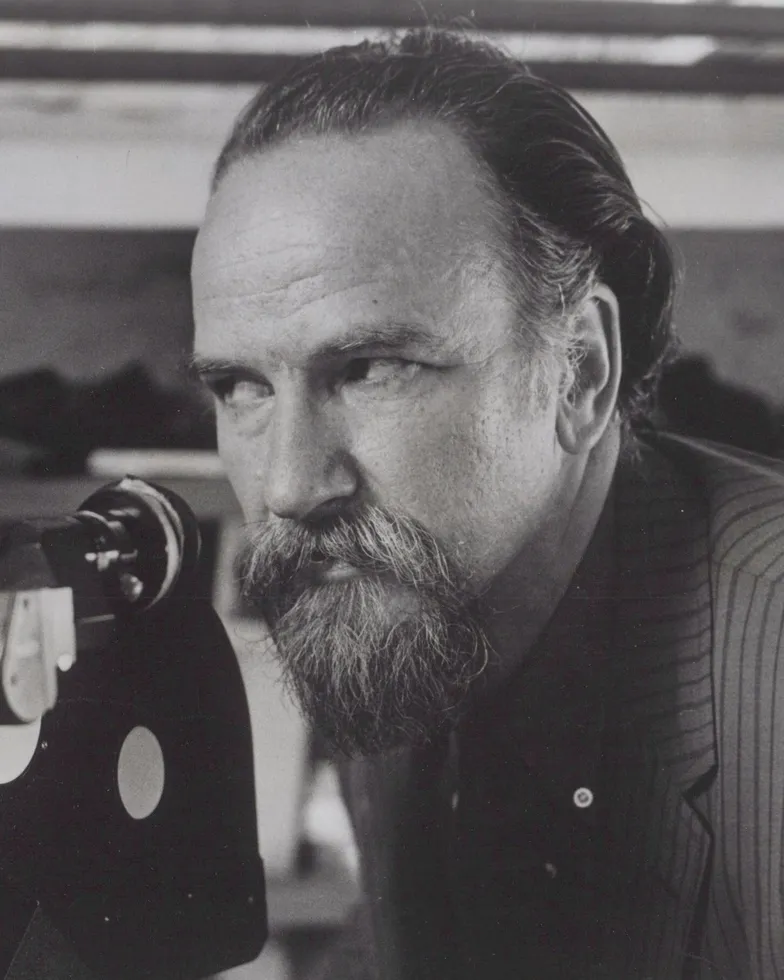
Ed Emshwiller
- 1966Relativity
- 1979Sunstone
- 1963Totem
Fed intoComputer animation
Fed intoComputer animation
A science-fiction cover painter who filmed dancers in multiple exposures, then made one of the first 3-D computer-generated videos.
Emshwiller graduated from the University of Michigan in 1947 and studied at the École des Beaux-Arts in Paris and the Art Students League in New York. As "Emsh" he became a leading science-fiction illustrator, painting covers for Galaxy and The Magazine of Fantasy & Science Fiction, and won the Hugo Award for best cover artist five times. He was married to the novelist Carol Emshwiller.
By the mid-1950s he was making 16mm films that combined abstract painting with the human figure. He became part of the New American Cinema and made a run of dance films, several with the choreographer Alwin Nikolais and his company, often building double exposures in camera. He also shot Hallelujah the Hills (1963) and Emile de Antonio's Painters Painting (1972).
In the 1970s he turned to video as artist in residence at WNET/13's Television Laboratory. Scape-Mates (1972) mixed computer animation with live action, and Sunstone (1979) is one of the first 3-D computer-generated videos. From 1979 he led the School of Film/Video at CalArts, later serving as provost, and he founded its computer animation lab.
Where to start with Ed Emshwiller, in the order they were made. Runtimes are approximate.
His brother Mac repeats one gesture, exposed again and again onto the same film, so the camera itself makes the choreography.
Alwin Nikolais's dance work performed by the Nikolais Dance Company, reshaped with split frames and superimposition.
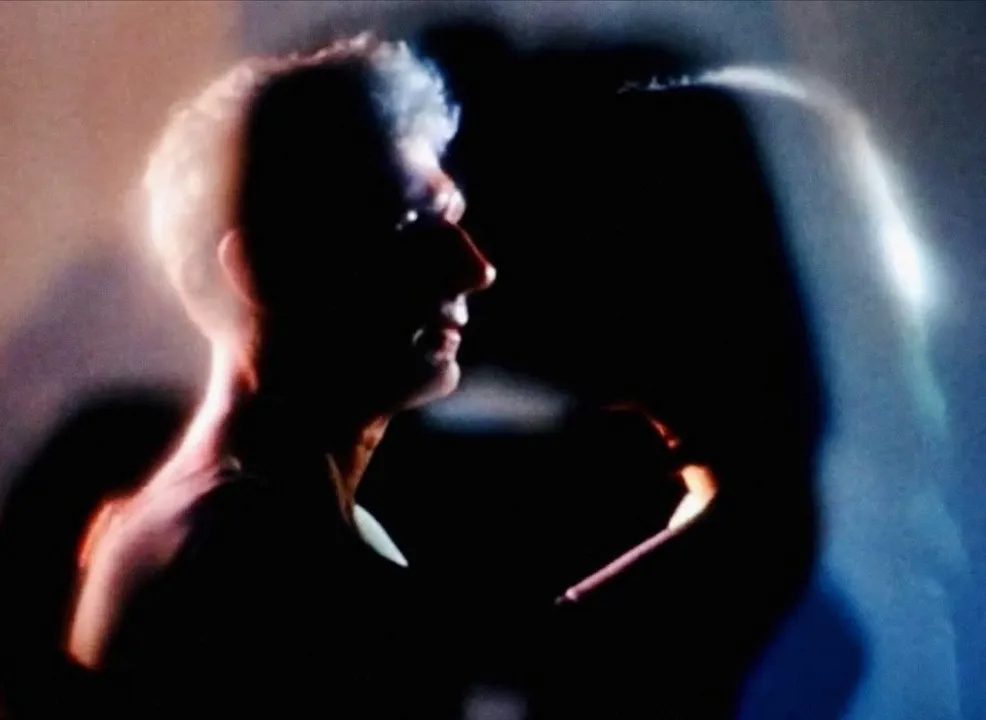
Made on a Ford Foundation grant. Cosmic-scale effects set against close-ups of the human body: the very large against the very near.
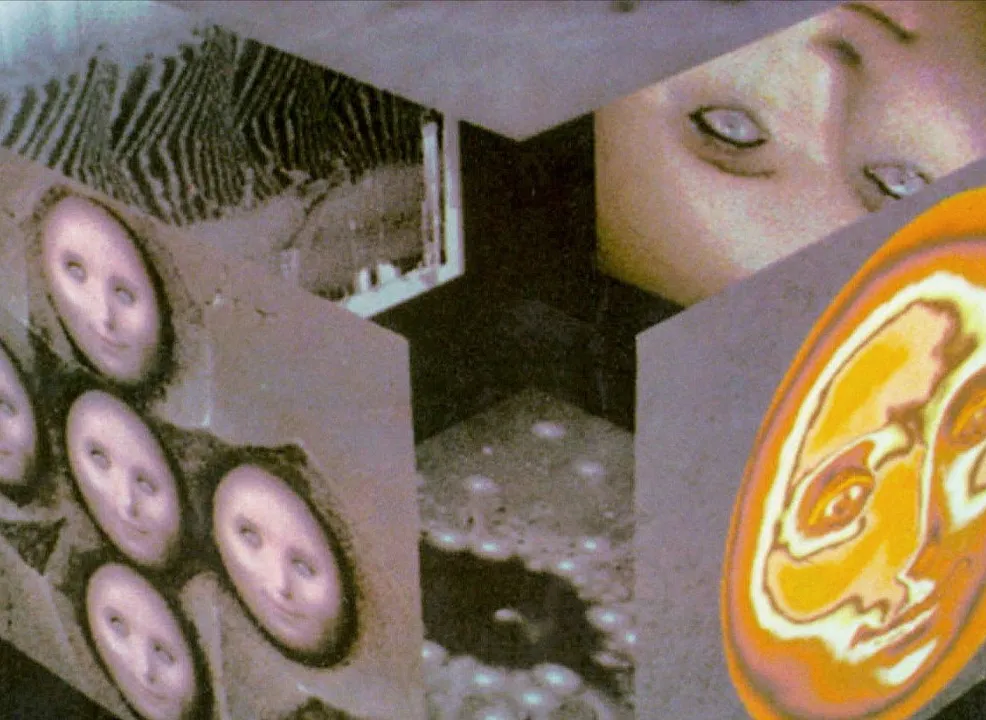
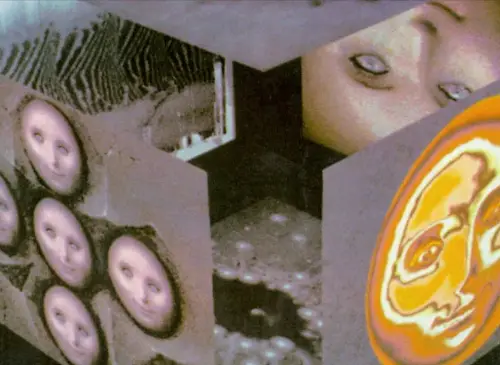
Made over about eight months at the New York Institute of Technology's computer graphics lab, with Alvy Ray Smith. A stone face becomes one side of a turning cube, and every side carries a moving image. MoMA holds it.
Where Emshwiller's ideas turned up next.